
How To Use Your “Save for Later” TPT Data
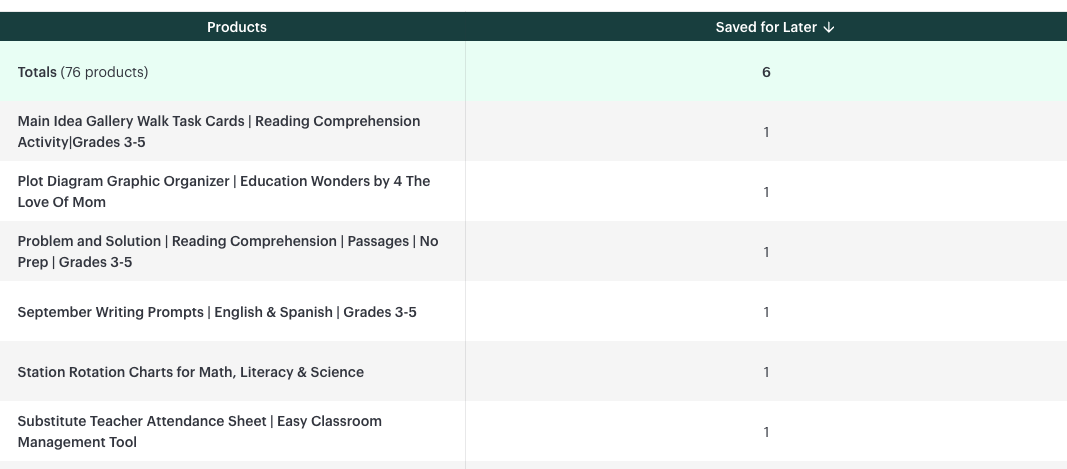
Teachers Pay Teacher Saved for Later Data Chart
What is “Save for Later” on a TPT product?
When teachers click “Save for Later” on a TPT product, it’s actually a strong sign of interest—not rejection. It usually means they see value in the resource but aren’t ready to purchase yet, whether due to timing, budget, or planning ahead for a future unit or season. In many ways, saved-for-later data represents warm buyer intent. These teachers are already considering your resource; they just need a little more clarity, confidence, or the right moment to take the next step.
Products with high saves but fewer purchases
Products with high saves but fewer purchases are especially valuable because they highlight opportunities. Often, teachers save a resource because they want to better understand how it works in a real classroom. This makes those products perfect candidates for blog posts, email features, and social media content. Writing about how to use the resource, when it fits best into instruction, and why it supports student learning can remove hesitation and help teachers visualize success. Once they see how easily the resource fits into their day, they’re much more likely to return and complete the purchase.
Saved-for-later data can also guide your promotional strategy. These products tend to perform especially well during sales because teachers were already interested—they just needed the price point or timing to align. Featuring saved products during sitewide discounts, highlighting them as teacher favorites, or sharing them in seasonal emails can significantly increase conversions. At the same time, reviewing saved products allows you to fine-tune product listings by clarifying grade levels, strengthening previews, or better explaining how the resource can be used for centers, intervention, or low-prep days.
Using your Save for Later data to help build your Marketing strategy
For content creators and bloggers, saved-for-later data can become a built-in content calendar. It shows exactly what teachers are curious about and what they’re planning to use later in the year. By turning these insights into blog posts, email campaigns, and featured products, you’re responding directly to teacher needs in a way that feels supportive rather than sales-driven. When used intentionally, saved-for-later data becomes one of the most authentic tools for growing trust, engagement, and long-term sales.
Bye for now,
Johanna
